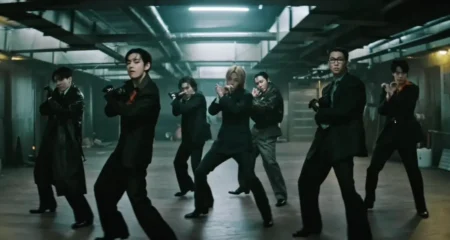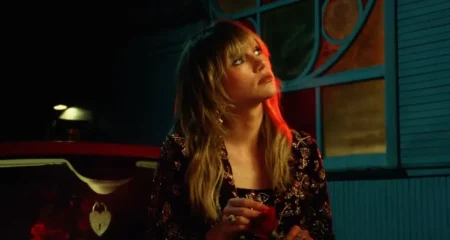


A$AP Rocky never drops visuals that sit still. The Harlem native has spent over a decade proving that music videos remain an art form worth obsessing over, from the psychedelic sprawl of “L$D” to last week′s Winona Ryder−starring “PunkRocky”.
With “Helicopter$,” the second single from his long-delayed Don’t Be Dumb album, Rocky and director Dan Streit deliver something that feels both retro and prophetic: a motion-captured fever dream coded in PlayStation polygons, where cops collide, robots wage war, and Rocky surveys the chaos from the sky.
The timing matters. Rocky released this 13 January, just four days before his fourth album finally arrives after eight years of false starts and broken promises.
But where “Punk Rocky” split opinion with its indie-rock pivot, “Helicopter$” strips back to fundamentals: menacing production, layered vocal delivery, and visuals that demand repeat viewings.
The cover art alone (a direct homage to the Grand Theft Auto 1 and 2 cases from the late nineties) signals Rocky’s intent to tap into a specific strain of millennial nostalgia, back when video games felt dangerous and unregulated.
The Sound: Skeletal Menace With Melodic Hooks
Kelvin Krash and Soufien 3000 handle co-production duties alongside Rocky himself, crafting a beat that feels stripped down but never empty.
The production leans on sparse 808s and a looping synth line that creates hypnotic momentum without overwhelming Rocky’s vocals.
This isn’t maximalist trap; it’s economical, letting each element breathe. The bass hits hard enough to rattle car speakers, but the mix stays clean, never muddy.
Rocky alternates between sung melodies and clipped bars, switching cadences mid-verse in that fluid way that’s become his signature.
“Hangin’ from the helicopter / Spinning like a helicopter,” he chants on the hook, turning the title into a mantra about elevation and motion.
The repetition works because Rocky understands how to make simple phrases stick without dumbing them down. His delivery carries weight even when the words stay surface-level.
The decision to remove Playboi Carti’s originally teased feature has sparked debate across Reddit and social media.
Some fans mourned the loss, whilst others celebrated it (but the final version proves Rocky made the right call).
This track works precisely because it stays singular in vision. Rocky commands every second, never sharing space or diluting the mood.
Carti’s chaotic energy would have clashed with the track’s controlled intensity. Sometimes subtraction creates strength.
The Lyrics: Power Dynamics and Status Symbols
Rocky spends the runtime flexing on status markers (helicopters, yachts, designer fits) but never tips into mindless materialism.
The helicopter functions as metaphor throughout: a symbol of elevation, escape, and the ability to survey everything from above whilst remaining untouchable.
“Let me in my bitch hangin’ from the helicopter,” Rocky raps, positioning himself as both conductor and spectacle, someone who makes the rules whilst everyone else scrambles below.
The verses touch on women, wealth, and wariness of outsiders trying to infiltrate his circle.
Rocky name-checks vegetable consumption (“Exercise eat all my vegetables”) in a bar that sounds absurd on paper but lands with his deadpan delivery.
He’s playing with contradictions: the rich rapper who still thinks about nutrition, the street kid who now owns aircrafts.
The lyrics never get too introspective (this isn’t confessional Rocky) but they sketch a portrait of someone hyperaware of his position and determined to protect it.
The Video: PS1 Aesthetics as Cultural Commentary
Here’s where “Helicopter$” transcends typical rap video territory. Rocky and Streit employ motion-capture technology to create low-polygon animations that look ripped from a 1997 console game.
The aesthetic choice isn’t arbitrary nostalgia; it’s pointed commentary. By rendering himself and his crew as chunky, angular figures, Rocky taps into a specific cultural memory: the era when games like GTA and Twisted Metal felt genuinely transgressive, when parents feared what their kids were playing.
The video opens with Rocky and his team jacking a helicopter from a rooftop before chaos erupts below.
SWAT teams swarm, police cars pile up in spectacular crashes, and robots engage in street-level combat whilst Rocky orchestrates from above, literally and figuratively.
The dystopian setting recalls action games from the PlayStation’s golden age, complete with blocky character models and stiff animations that somehow enhance rather than detract from the impact.
Streit and Rocky pack the video with visual references that reward repeat watches: MTV’s BattleBots-style robot battles, homages to late-nineties action cinema, and that persistent orange-and-grey colour palette that defined early 3D graphics.
The D.B.D. helicopter (the same prop Rocky used during his 2025 Lollapalooza set) anchors the visual narrative, a physical object that bridges his live performances with recorded media.
When accusations of AI generation started circulating online, Rocky responded immediately and emphatically: “THIS VIDEO IS NOT Ai GENERATED! JUST GENERATIONAL.”
The all-caps insistence matters because it speaks to Rocky’s investment in craft.
This video required teams of animators, motion-capture performers, and visual effects artists working across months.
The retro aesthetic comes from deliberate artistic choices, not algorithm outputs. Rocky wants credit for the work, and he’s earned it.
Rocky’s Visual Legacy and Tim Burton’s Album Artwork
The “Helicopter$” video sits comfortably within Rocky′s established visual language.
He′s always understood that music videos can function as short films, not just promotional material.
From “Peso” through “L$D” and now here, Rocky treats directors as true collaborators, building worlds rather than just capturing performances.
For the Don’t Be Dumb album cycle, Rocky enlisted Tim Burton to design the cover artwork. Burton’s involvement came after Rocky played him album cuts and received enthusiastic approval.
“He was rocking his head and he’s like, ‘Wow! I didn’t know you made that kind of music!'” Rocky recalled in a Billboard interview.
Burton’s gothic sensibility shapes the album’s visual identity through his cover art, whilst the “Helicopter$” video itself represents director Dan Streit and Rocky’s own dystopian vision (distinct from Burton’s aesthetic but equally committed to world-building).
Rocky’s commitment to the visual medium feels increasingly rare in an era when most rappers treat music videos as obligatory content.
He’s stated repeatedly that videos help him conceptualise albums, that he thinks in images as much as sounds.
“Helicopter$” proves he hasn’t lost that drive. The video doesn’t just accompany the song; it completes it.
Production Notes: The Team Behind the Sound
Kelvin Krash, who’s worked extensively within Rocky’s orbit, brings a producer’s understanding of space and restraint.
The beat never clutters (every element serves a purpose). Soufien 3000’s co-production adds subtle Middle Eastern influences in the synth choices, giving the track an exotic tinge without cultural appropriation.
Rocky’s own production credit matters because it shows his hands-on involvement at every level.
The mix, handled by engineers who understood Rocky’s vision, keeps his vocals front and center whilst letting the bass operate as a separate character.
Modern rap production often buries vocals under layers of effects; “Helicopter$” maintains clarity.
You can hear every word Rocky delivers, every breath between bars. That sonic transparency matters for a track built on repetition (the hook needs to hit cleanly every time, and it does).
Cultural Resonance: Why PS1 Nostalgia Hits Different
The PlayStation aesthetic choice deserves deeper examination. Millennials who grew up playing GTA, Driver, and Tony Hawk games now occupy their thirties, the exact demographic with disposable income and streaming power.
But Rocky’s tapping into something beyond pure nostalgia (he’s accessing the feeling of possibility those early 3D games represented).
Late-nineties console games promised freedom: open cities to explore, rules to break, consequences that reset with every game over.
The graphics were primitive, but the ambition was boundless. By rendering “Helicopter$” in that visual language, Rocky connects his own career arc to that same anarchic energy.
He’s the kid who grew up playing those games, now living out the fantasies they promised.
The dystopian setting also feels eerily relevant. Climate anxiety, political instability, technological disruption (the video’s chaotic streetscape mirrors contemporary unease whilst packaging it in retro graphics that soften the impact).
It’s apocalypse as entertainment, the same formula those old games used to massive success.
You might also like:
- Travis Scott PBT Review: Tyla & Vybz Kartel’s Dancehall Collabo
- Kendrick Lamar Unleashes Euphoria: A Bold Drake Diss Track That Divides the Rap World
- Kendrick Lamar’s 6:16 in LA: Inside Hip-Hop’s Most Strategic Diss Track of 2024
- Playboi Carti and Travis Scott’s Latest Hit: BACKR00MS
- Cole’s cLOUDs Lyrics Meaning and Review: A Reflection on AI, Greed, and the Future of Hip-Hop
Performance and Delivery: Rocky’s Vocal Control
Rocky’s never been the most technically proficient rapper, and that’s never been the point.
His genius lies in vibe creation, in crafting vocal tones that enhance production rather than fighting it.
On “Helicopter$,” he employs a mid-register delivery that sits perfectly in the mix, neither aggressive nor passive. He sounds in control, which matches the lyrics’ themes.
The melodic sections showcase Rocky’s underrated singing ability. He’s not hitting Whitney Houston runs, but he understands melody instinctively, knows which notes will stick in listeners’ heads.
The hook’s simplicity becomes its strength through Rocky’s commitment to the performance.
Lesser rappers would have embellished, added ad-libs, complicated the structure. Rocky trusts the core idea and executes it cleanly.
His flow never rushes. Even on faster verses, Rocky maintains a languid quality that suggests ease, like he’s barely trying. It’s an illusion (recording these vocals required countless takes and precise engineering) but the illusion works.
Rocky sounds like rapping comes naturally, like he could do this forever without breaking a sweat.
The Carti Absence: Why Less Became More
Leaks and snippets had confirmed Playboi Carti’s involvement in early versions of “Helicopter$.” His removal from the official release sparked immediate debate.
Some fans accused Rocky of caving to negative reactions, whilst others praised the decision.
Neither explanation captures the reality: Carti’s absence makes the track stronger.
Carti’s recent output has polarised listeners. His vocal style (high-pitched, fragmented, often incomprehensible) works brilliantly on his own projects but can overwhelm collaborative tracks.
“Helicopter$” thrives on its focused intensity, on Rocky’s singular vision executed without distraction.
Adding Carti would have shifted the energy, possibly improved certain moments, but definitely changed the track’s DNA.Rocky clearly wanted this one for himself.
After eight years without an album, after countless features and guest verses, he’s reclaiming space.
“Helicopter$” announces that Rocky can still command a track alone, that he doesn’t need star features to generate heat. The Carti-less version stands as proof.
Commercial Prospects and Reception
Early streaming numbers on Youtube suggest “Helicopter$” is connecting with Rocky’s core audience whilst drawing curious listeners attracted by the visual spectacle.
YouTube comments overflow with praise for the video’s creativity, with many calling it Rocky’s best visual work in years.
The track won’t dominate radio (it’s too atmospheric, too deliberately paced for pop playlists) but it doesn’t need to.
Rocky’s in a rare position: he can release music without chasing chart positions. Don’t Be Dumb will sell based on name recognition and the eight-year wait alone.
“Helicopter$” functions as an artistic statement more than a commercial single, reminding the industry that Rocky operates according to his own timeline and aesthetic standards.
In 2026, that cultural penetration matters more than Billboard positions. Rocky’s building momentum through genuine cultural engagement rather than industry manipulation.
Final Assessment: Rocky Reclaims His Space
“Helicopter$” succeeds because it plays to Rocky’s strengths whilst incorporating fresh visual ideas.
The song is a solid, well-crafted track that does exactly what it sets out to do.
But paired with the video, it becomes something more: a statement about craft, vision, and the importance of artistic control.
Rocky’s insistence that the video isn’t AI-generated reveals his awareness of current industry anxieties.
As artificial intelligence threatens to automate creative work, Rocky positions himself as an artist who still values human labour, who still believes in teams of skilled professionals working toward shared vision.
That stance might seem obvious, but in an industry increasingly comfortable with algorithmic shortcuts, it matters.
The track rates somewhere around a 7 out of 10 (strong enough to justify its existence, not transcendent enough to become an all-time Rocky classic).
But the complete package, song plus video plus cultural moment, pushes it higher. Rocky’s reminding us why he matters, why his voice still cuts through the noise.
The helicopter keeps spinning, and he’s still hanging from it, surveying everything below with that characteristic mix of confidence and detachment.
Don’t Be Dumb drops 16 January 2026, and if “Helicopter$” and “Punk Rocky” represent the album’s range, we’re in for an exciting genre-bending experience.
Rocky’s taken his time (maybe too much time) but he’s returning with purpose. The helicopter’s landed, the chaos has cleared, and Pretty Flacko’s ready to reclaim his territory.