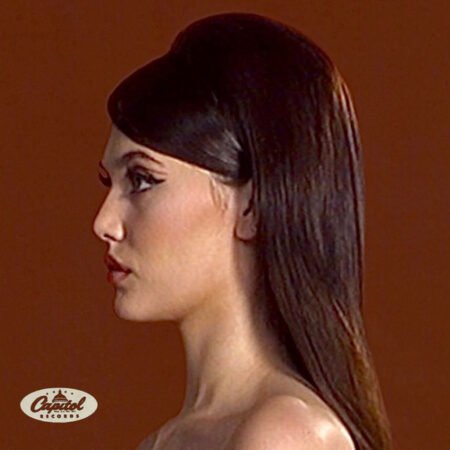


Artist: Jack Harlow
Album: Monica
Release Date: March 13, 2026
Label: Atlantic Records
Genre: Neo-Soul, R&B
Rating: 3/5
Monica is Jack Harlow’s fourth studio album, a nine-track neo-soul and R&B record about chasing women who have no interest in being caught.
Recorded at Electric Lady Studios in New York with a live band including jazz pianist Robert Glasper and organist Cory Henry, with almost zero rapping and no cursing across its entire 30-minute runtime.
That one sentence will either sell you on it or lose you entirely, and that split is already happening in real time.
What Happened Between Jackman and This
Between his 2023 project Jackman, which hit number one on Billboard’s Top Rap Albums chart and earned a BET Hip Hop Award nomination, and now, Harlow scrapped four singles, moved from Kentucky to New York, and spent time figuring out what he actually wanted to make.
He has been open about spending two years on a project that was no longer exciting him.
That reset eventually led him to Electric Lady Studios in Greenwich Village, one of the most mythologised recording rooms in modern music.
Built by Jimi Hendrix in 1970, the studio has hosted artists ranging from Stevie Wonder and Led Zeppelin to Beyoncé, Frank Ocean, and Kendrick Lamar. The comparison critics keep returning to, though, is Voodoo, the 2000 neo-soul landmark by D’Angelo that helped define the Soulquarians era.
Harlow has cited D’Angelo, Erykah Badu, Slum Village, and Sade as reference points for Monica, and recording in that same room makes the lineage hard to ignore.
The result is an album built around four strict rules: no braggadocio, no cursing, no digital instruments apart from drums, and no rapping at all.
Nine songs later, Monica sounds exactly like a project created under those constraints: soft, live-band driven, and closer to late-night neo-soul than anything in Harlow’s earlier catalogue.
What the Album Sounds Like
Aksel Arvid produced seven of the nine tracks, and that consistency is both the album’s main strength and one of its few weaknesses.
The drums stay low and soft throughout, bass lines move slowly underneath, and Harlow’s vocals ride the top of the mix without ever straining.
Cory Henry plays organ and piano on “My Winter” and the neo-soul warmth there is the closest the record gets to something genuinely transported.
Rogét Chahayed, Angel López, and Clay Harlow co-produced “Lonesome,” which has the most developed melodic architecture on the LP. Ravyn Lenae’s backing vocals appear on four cuts and are among the best things here.
She blends into the sound without pulling focus, which actually raises a question the album itself never quite answers.
Omar Apollo also contributes, and both of them vocally outclass the person whose name is on the cover. That is not entirely a problem. Harlow has said he wanted his voice to function as just another instrument in the ensemble, and on the better tracks, that approach pays off.
The phrasing is controlled, the melodies are singable, and the monotone quality that could easily become a liability stays just credible enough.
The production is genuinely soothing. Jazz-inflected, warm, mostly quiet. If you want something to play at low volume while you are doing something else, this album is very good at that.
Harlow has said publicly that he likes soft music, likes silence, dislikes anything erratic, and Monica sounds exactly like a person who means all of that.
Love, Lust, Regret
Jack in his lover boy era. “Trade Places” opens the album with warm organs and saxophone over a smooth tempo, Harlow singing about wanting to be all over someone who has him completely gone. It is the most immediate the record gets, and the clearest early signal that the chest-puffing is gone.
The women on Monica are consistently independent, self-sufficient, and not particularly interested in Jack Harlow.
On ‘Lonesome,’ the chorus lists her self-sufficiency in clipped detail: solo hotel check-ins, her own income, her own bed.
The second verse makes it personal: she caught him at a bad time, discovered something about him, took the elevator out of his place, and hasn’t been back since.
On “Prague,” physical distance is the only thing keeping the feelings manageable.
On “Living Alone,” she has built a full life in solitude and he is the one disrupting it. “I hate to impose, I can’t postpone.” That exchange captures the record’s central dynamic precisely. She says “What are you on?” He says he is just gone off her. That back-and-forth is the clearest writing on the album.
“All of My Friends” has his circle telling him he moves too fast and falls too hard. Ravyn Lenae’s harmonies sitting just behind like a second opinion. He hears them and carries on anyway.
“Against the Grain” features a woman looking right at him without feeling anything. “Move Along,” sung entirely by Cory Henry, flips the address.
It is Harlow warning someone off himself, telling them they will find trouble if they wait around, that he will break their heart. Five lines. Sits in the middle of the record like something he wrote honestly and then proceeded to ignore.
“Against the Grain” also holds the album’s most surprising moment. The same track closes with a spoken word section featuring a real couple, reportedly Harlow’s parents, recounting how they got together in clean, simple terms.
Met Friday, called Saturday, went out Sunday, then every day, then got married. Placed at the end of a record about romantic near-misses and avoidance, it works as a contrast rather than a conclusion.
Where Monica Falls Short
The album is short at just nine tracks and under 30 minutes, and within that limited space some of the writing does not do enough.
“Say Hello” has a pleasant enough chorus but the central line, “I’m giving up control of you,” repeats without developing.
“Living Alone” sets up its best moment in verse two and gets there. He wants to meet her, hates to impose, can’t postpone, then the second verse tips into something less controlled: her number, his name etched on stone, the claim that she’s the one she should belong to. She asks what he’s on. He says he’s just gone off her. That exchange sticks. Verse three pulls back into reassurance and loses the momentum it just built.
“Prague” has a third verse that reaches for something with the petunia imagery and the age gap admission but the melody does not support the ambition of the lyric.
The bigger issue across the album is that the production is so consistent in texture and tempo that individual tracks start to blur.
Nothing dramatically shifts the mood. Nothing accelerates.
Some listeners have already called it “coffee shop music” and that is a reductive read, but it points at something real.
When every track runs at the same warm, low-key temperature, the songs that need intensity start to feel like they are waiting for something that never arrives.
Harlow’s voice is fine. Better than his detractors are giving him credit for. But this is a production that assembled Robert Glasper, Cory Henry, and Ravyn Lenae, and there are moments where you can feel the gap between what the musicians around him are doing and what the lead vocal is contributing.
He handles the simpler melodic material well. The more sophisticated passages are where the thinness shows.
Best Songs on Jack Harlow’s Monica
Living Alone is the most complete song on the record. The concept is specific, the writing holds up, and the production gives the vocals room to breathe without overexposing them.
Against the Grain works because of that final spoken section, which recontextualises everything before it.
My Winter is less structurally tight than “Living Alone” but it is the most revealing track here, admitting he lies next to one person and thinks about another, calling it a curse rather than romanticising it.
One is the better song; the other is the more honest moment.
Verdict
Monica is a coherent pivot and a mostly enjoyable one. The sound is genuinely good: laid-back, jazz-inflected, soothing in a way that feels earned rather than lazy.
Harlow’s neo-soul direction is more interesting than if he had followed his white contemporaries into country crossover territory, and he is correct that hints of this sound were already in his catalog. But it is slight.
Nine tracks is not enough time to establish a new identity at full depth, and some of those nine are thinner than the concept demands.
As a sustained lyrical statement it does not reach what Jackman was doing in terms of verbal density, though that was a different brief entirely, and the live-band framework that gives the album its best qualities also creates a sonic monotony that works against the weaker songs.
As a statement of intent it is worth taking seriously. As an album it is decent, a smooth and mostly enjoyable listen that suggests the more interesting version of this project is probably the next one.
3 out of 5
Standout Tracks:
Living Alone
Against the Grain
My Winter
Move Along
You might also like:
- The Ultimate Guide to Jack Harlow’s Lovin On Me: Lyrics, Meaning, Video, Reviews, and More
- The Meaning Behind Jack Harlow’s Hello Miss Johnson: A Fresh Take on Modern Romance
- Jack Harlow’s Tranquility: A Deep Dive into Lyrics, Meaning, and Artistic Growth
- Jack Harlow Set You Free Lyrics Meaning and Review: His Most Honest Song Yet?
- Jack Harlow & Doja Cat’s Just Us Lyrics Explained: Sex, Ego, and a Chaotic Dinner Date