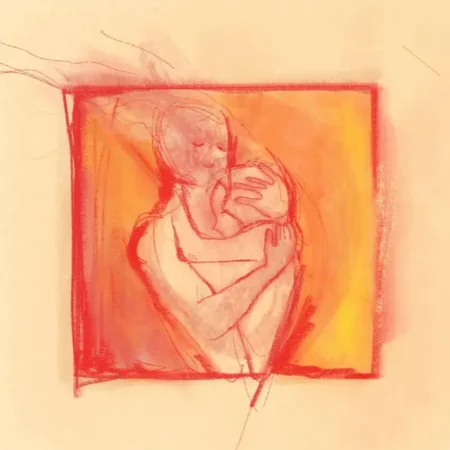

Six months after its 4 June release, Jon Bellion’s Father Figure reveals itself as one of 2025’s most misunderstood albums.
The 14-track record arrived after a seven-year hiatus, during which Bellion reclaimed his masters from Live Nation and earned four GRAMMY nominations for production work with Jon Batiste, Justin Bieber, and Lizzo.
This is his first album released independently through Beautiful Mind Records, marking a return on his own terms.
That production work positioned Bellion as one of contemporary pop’s most influential architects, though his contributions often went uncredited in public discourse.
Whilst artists he’s shaped dominated charts and conversations, Bellion remained in the background – a curious position for someone whose fingerprints appear across the sonic landscape of mid-2010s to 2020s pop music. Father Figure feels, in part, like his assertion of authorship.
“Nobody walks away for six years and then comes back and says, ‘This is what I’ve learned in six years of being away from the machine,'” Bellion told GRAMMY.com in June. “To walk away for six years, develop myself as a person, and then come back? People don’t get that opportunity. Ever!”
That development shaped every aspect of Father Figure. The album documents Bellion’s transition into fatherhood across three sons, his legal battle for artistic control, and his relationship with his wife, who has known him since age 15. “She’s been around for a long time,” he explained. “She is my anchor to reality.”
The Creative Process: Remote Collaboration and Spontaneous Recording
The production on “WASH” showcases Bellion’s meticulous approach to vocal layering. What became one of the album’s standout tracks emerged from Bellion’s overwhelming reaction to his wife’s beauty, transformed into intricate production that prioritises emotional resonance over radio appeal.
Track three, “OBLIVIOUS,” showcases similar sonic ambition with beautifully layered production that channels mid-2010s Coldplay at its most atmospheric – the track builds towards a piano moment near its conclusion that some listeners have compared to Moby’s “Porcelain,” demonstrating Bellion’s gift for blending influences into something distinctly his own.
Its central lyric – “If love is a lie, I’m oblivious” – captures the album’s willingness to embrace vulnerability without cynicism, choosing deliberate naivety over protective detachment.
“I wanted melodies that were so infectious that you were almost angry at it and lyrics that are just as vivid, but crisp and focused and completely intentional,” Bellion said about his creative aims.
Fatherhood as Central Theme
Written 48 hours before his first son’s birth, “WHY” (featuring Luke Combs) captures the terror of new parenthood.
“What if you break my heart? What if you get hurt?” Bellion explained. “Maybe a song about that could help a lot of people in relationships, not just guys who are having sons, just people who are like, what do you do with love if it makes you vulnerable?”
The song doesn’t provide answers. “I like that the song doesn’t give you an answer,” he noted. “‘If the higher I fly is the further I fall/ Then why love anything at all?’ I think coming from the place of I don’t have an answer will make people relate to it more.”
Title track “FATHER FIGURE” combines breakbeats, sirens, and fractured choirs to create what Apple Music describes as “a maelstrom that underscores what feels like the album’s statement of purpose: ‘Had a big chain ’round my neck/That I worked for my whole life/But the first thought was my kids.'”
The production’s backbone reportedly uses a chopped-up vocal sample from collaborator Dougie, whose unused verse from “ITALIA BREEZE” included the phrase “known to protect, I do that shit however.”
Bellion repurposed this into the track’s foundation, creating what he calls a meditation on presence versus perfection.
Regional Identity and Musical Heritage
“ITALIA BREEZE” showcases Bellion’s Long Island Italian-American background through J Dilla-influenced hip-hop production.
“In my younger years on Long Island, Rakim and Erick Sermon were kind of the only guys who really made it, besides Billy Joel,” he explained to GRAMMY.com.
“As you get older, you think back on these memories, the culture that you grew up on, the structure that provided you, and the jokes—Italians have so much culture.”
The track includes the line “They called us guineas for rockin’ pinnies I rock ’em nightly,” reclaiming slurs Bellion heard as a child.
“I’m wearing a tee right now! Now, I rock ’em to sleep because it’s a return to my ancestors and my grandparents who raised me and got me to this level.”
The track’s most striking moment arrives in its central assertion: “Child of God, I am the Alpha and Omega’s draft.”
It’s a declaration that positions Bellion as both divinely purposed and ancestrally connected, reclaiming identity through spiritual authority rather than seeking external validation.
Yet “ITALIA BREEZE” remains one of the album’s more divisive tracks. Whilst Bellion’s lyrical reclamation of cultural identity resonates powerfully, the laid-back rap delivery feels somewhat undercooked sonically compared to his previous excursions into hip-hop territory on tracks like “Adult Swim.”
The production never quite achieves the effortless groove it reaches for, making it one of the album’s weaker moments despite its thematic significance.
“RICH AND BROKE” draws from the 5 April 2024 magnitude 4.8 earthquake that hit near Tewksbury Township, New Jersey.
“For a Long Island kid turned New York artist, that’s a memory, not a metaphor,” as one analysis notes. The production features TenRoc’s programming and Manny Marroquin’s mix, with “stacked vocals” creating a crowd effect around Bellion’s lead.
Strategic Collaborations
Pharrell Williams appears on opening track “HOROSCOPE,” a pairing Bellion describes as deeply meaningful.
“Pharrell literally raised me musically. That’s the actual sensei,” he said. At a dinner together, Pharrell told Bellion: “Chris Martin. Linkin Park. I haven’t heard something like that that has made me feel like this is large, and I feel included until you played me your album. This is very important. Keep doubling down on it.”
Jon Batiste features on “MODERN TIMES,” originally written for Batiste’s World Music Radio album. “As I was writing it and doing the melodies, I was putting my children to bed, and lightning struck,” Bellion recalled.
The track explores American anxiety through layered production that builds to Batiste repeatedly screaming “America” by the song’s end.
“GET IT RIGHT” features five uncredited vocalists, including what sounds remarkably like Teddy Swims on the chorus harmonies, discovered by attentive listeners.
The decision to leave features unlisted reflects Bellion’s anti-commercial approach. “We’re not focused on streams or using names to get something,” he explained.
The track functions as an autobiographical love letter to his wife, referencing their teenage years together (“I remember I was 15 / Your sister said I was good, but I’d never be Swizz Beatz”) and celebrating her steadfastness through his career ascent whilst maintaining her grounded nature (“Says Chanel on the bag, but you’re still using coupons at Target”).
The Album’s Visual Identity
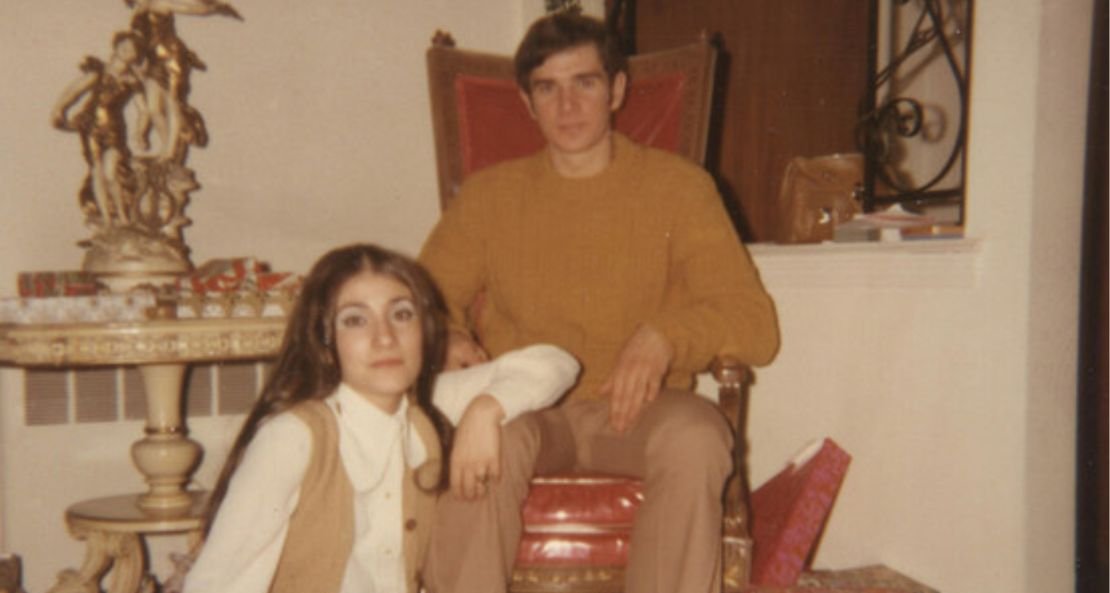
The cover photograph shows Bellion’s parents from decades past, his father seated with his mother positioned on his leg, surrounded by distinctly Italian-American decor. “That is reality.
That’s the closest thing we have to reality,” Bellion said. “That, to me, felt like the exact opposite of the animated covers of Glory Sound Prep or the cover of The Human Condition, which was like, ‘Come with me to this place!’ Now, at 33, it’s like, these are my fears. This is my trauma. This is my family. This is who I am, and I can’t escape.”
Critical Reception and Commercial Performance
The album debuted on the Billboard 200, marking Bellion’s return after seven years. Released independently through Beautiful Mind Records following his departure from Republic Records, Father Figure demonstrated commercial viability without major label support.
Critical response split between those appreciating Bellion’s maturation and fans wanting The Human Condition’s maximalist approach.
Spectrum Culture noted how tracks like “ITALIA BREEZE” showcase Bellion’s “proximity to New York hip-hop and his study of musicians like J Dilla.”
The publication praised the Pharrell collaboration as “another proven hitmaker acknowledging Bellion as a member in this exclusive space.”
Album of the Year user scores ranged from 67 to 100. One reviewer noted that “WASH might be the best song Jon’s ever made. The production is very lush, the lyrics are meaningful, the vocal performance is great.”
Another called the album “his most consistent and touching effort” while acknowledging “a few weaker moments.”
Reddit’s r/popheads discussion thread revealed divided opinions. Several longtime fans expressed feeling disconnected from the new direction, with one stating they “may have just outgrown my Jon Bellion phase.”
Others praised specific tracks while critiquing the album’s pacing and feature chemistry. The deeper album cuts reward close listening.
“DON’T SHOOT” takes an unexpected detour into southern country territory, with Bellion adopting a subtle twang that initially seems incongruous with his established sound.
Yet the gamble pays off – the restrained country inflections work far better than the more overt crossover attempt on “WHY,” perhaps because Bellion fully commits to the stylistic departure rather than straddling genres.
“RICH AND BROKE,” inspired by the April 2024 earthquake that struck New Jersey, builds on drum and bass foundations whilst Bellion reflects on how material possessions lost meaning the moment the ground shook and his first thought turned to his children’s safety.
Closer “MY BOY”: Vulnerability Without Orchestra
The album ends with “MY BOY,” featuring only an SATB choir backing Bellion’s vocals. “I hate the weakness of showing my son what makes me sad,” he confesses in the spoken word section, before concluding: “He said a present father is worth way more than a perfect dad.”
This closing track strips away the album’s “gorilla energy of the masculine” (Bellion’s phrase) to reveal the vulnerability underneath.
It’s the album’s most devastating moment – a meditation on the impossibility of truly shielding one’s children from the world’s pain, delivered with such raw honesty that it becomes genuinely moving.
The simplicity amplifies the emotional weight; where other tracks showcase Bellion’s production prowess, “MY BOY” relies solely on voice and choir to create something achingly tender.
His children have heard the album extensively. “They’re in the backseat saying, ‘Put on HOROSCOPE!’ ‘Read you like a horoscope, read you like a horoscope!’ ‘What happened to your light, what happened to your light?'” Bellion shared. “I think these are formative memories for them.”
The Verdict: Art Over Algorithm
Father Figure functions as a statement album in the truest sense. Bellion chose artistic growth over commercial calculation, mature restraint over attention-seeking production, and personal truth over universal appeal.
The album’s most “mellow” moments demonstrate more confidence than any bombastic production could achieve.
“I’m most excited about being reintroduced as, like, oh, he’s still challenging his fan base,” Bellion reflected. “He’s still growing in a direction. But now, it’s on a totally different maturation level. A lot of artists don’t grow because they’re constantly putting out content. So, to hear this snapshot of Glory Sound Prep and then fast forward six years to whoever that guy is, well, whoever that guy is is the most me I think I’ve ever been—for better or for worse.”
The album may not convert those seeking The Human Condition’s maximalist pop or radio-ready hooks. That’s by design. Bellion made a record for adults navigating complexity, not teenagers seeking escapism.
The production serves emotional truth rather than streaming metrics. The themes examine fatherhood from uncomfortable angles rather than romanticising the experience.
Six months after release, Father Figure stands amongst 2025’s most accomplished albums. Not because it chases trends or meets expectations, but because it documents genuine artistic evolution.
Bellion returned from his hiatus with purpose, skill, and stories worth preserving. This is pop music operating at its most honest.